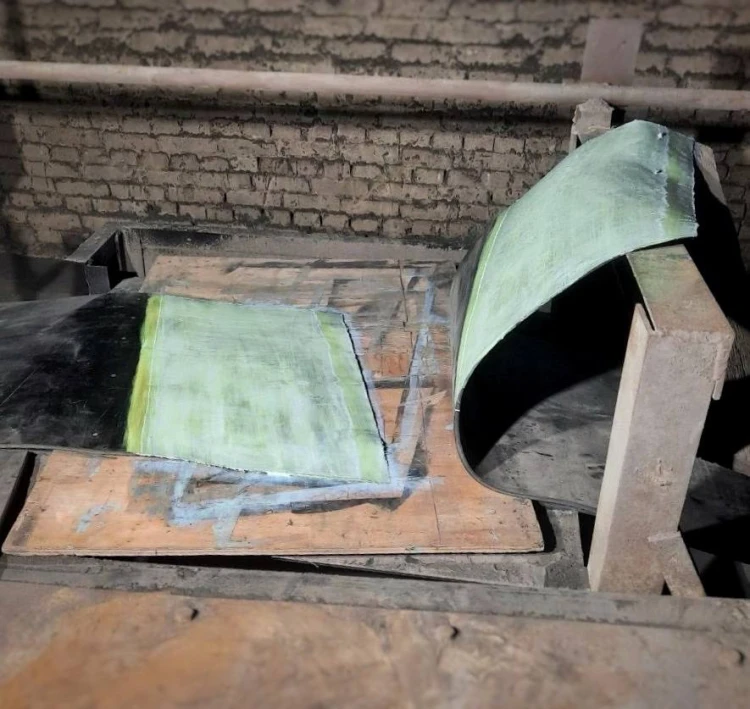
Cold vulcanization of conveyor belts is an efficient method for repairing and splicing conveyor belts without using high temperatures. This technology is widely applied for conveyor belt repair when it is crucial to reduce downtime and perform work directly on-site.
Cold vulcanization of conveyor belts is ideal for:
emergency and urgent repairs
situations where belt dismantling is impossible
repairs without stopping production
restoring damaged belt splices
on-site repair conditions
✔️ minimal equipment downtime
✔️ no need to dismantle the conveyor belt
✔️ high splice strength
✔️ fast repair execution
✔️ on-site service availability
✔️ cost-effective compared to belt replacement
We perform:
cold vulcanization of conveyor belt splices
repair of cuts and tears
restoration of belt surface
reinforcement of worn areas
We use only proven cold vulcanization adhesives, ensuring long service life and reliable performance.
The price of cold vulcanization depends on:
belt type and thickness
conveyor width
damage complexity
working conditions
We offer competitive pricing and transparent cost calculation.
Зацікавили наші товари та потрібна консультація?
Залишіть заявку та наш менеджер проконсультує вас
Виберіть як з вами найзручніше зв'язатися
Часті запитання
Which conveyor belt should I choose for my production?
+The choice of conveyor belt depends on the material and operating conditions.
- For heavy and loose materials, a rubber belt is usually used.
- For boxes, packaging and food products - PVC or PU.
- For hot materials, a heat-resistant belt is required, and for fatty or oily materials - an oil-resistant belt.
- If the conveyor operates at an angle, chevroning may be required.
It is enough to know what you are transporting and in what conditions, and we will select a belt that will work reliably and for a long time.
What is the difference between rubber conveyor belt and PVC/PU?
+Rubber conveyor belt and PVC/PU belt differ in their application and operating conditions.
Rubber conveyor belt
Strong and durable, designed for heavy and abrasive materials. Works well on heavy loads, long conveyors and in open areas.
PVC/PU belt
Lighter and more flexible, used for clean and precise processes. Often used in the food industry, packaging and logistics.
What are the terms of order production?
+The terms of production and shipment of the order depend on its configuration.
Standard orders are shipped within 1-3 business days.
If the order includes additional services (chevroning, corrugated board, other modifications), the production and shipment term is 3-5 business days.
Tapes for individual orders from Europe are delivered within 3-5 weeks.
We always agree on the exact terms with the client after confirming the order.
What is drum lining and what benefits does it provide?
+Drum lining is the coating of the surface of the conveyor drum with special technical plates of different densities and with different degrees of operational endurance
Why is it needed:
The rubber coating increases the adhesion between the drum and the belt, so that the belt does not slip even under load, moisture or dust.
Main advantages:
- stable operation of the conveyor without slipping;
- less wear on the belt and the drum itself;
- better operation in wet and dusty conditions;
- extension of the equipment service life.
Can the ribbon be made or cut to individual sizes?
+We can cut the belt to the required width and cut the required length according to the parameters of your conveyor.
This allows you to receive a belt that is immediately ready for installation without unnecessary modifications.
Which carriers do you use to ship goods?
+We ship the goods in a manual way for the client.
You can request self-pickup or delivery by carriers “Nova Poshta”, “SAT” or “Delivery”
We will help consumers choose the optimal delivery option - based on terms, type and dimensions.
Which method of connecting tape is better: vulcanization or mechanical locks?
+There are two main ways to connect a conveyor belt: vulcanization and mechanical locks. Each has its own advantages.
Vulcanization
This is the "gluing" of the belt under pressure and temperature. The joint is strong and smooth, almost like a solid belt.
Suitable if:
- maximum strength and durability;
- quiet operation without shocks;
- continuous operation without frequent disassembly are important.
Mechanical locks
This is a metal or plastic connection that can be quickly installed or removed.
Suitable if:
- quick installation or repair;
- the ability to disassemble the belt;
- temporary or emergency solutions.
Why is chevroning a ribbon needed and in what cases is it necessary?
+Chevronizing a belt is the application of special rubber ribs (chevrons) to the surface of a conveyor belt.
Why is it needed:
Chevrons hold the material on the belt and prevent it from rolling back during transportation.
When chevronizing is necessary:
- when working on inclined conveyors;
- when transporting loose or fine materials;
- when the material slides on a smooth belt.
ІНШІ ПОСЛУГИ


